
The emerald, or Panna stone, is one of the world’s most desired gemstones. Its deep, vivid green color symbolizes wealth, rebirth, and royalty.
Unfortunately, its high value means the market is flooded with fakes. These can range from dyed glass to synthetic laboratory-grown stones.
Learning how to check your gemstone is the single most important step before you buy.
Here is a simple, comprehensive guide to instantly identify a genuine green emerald.
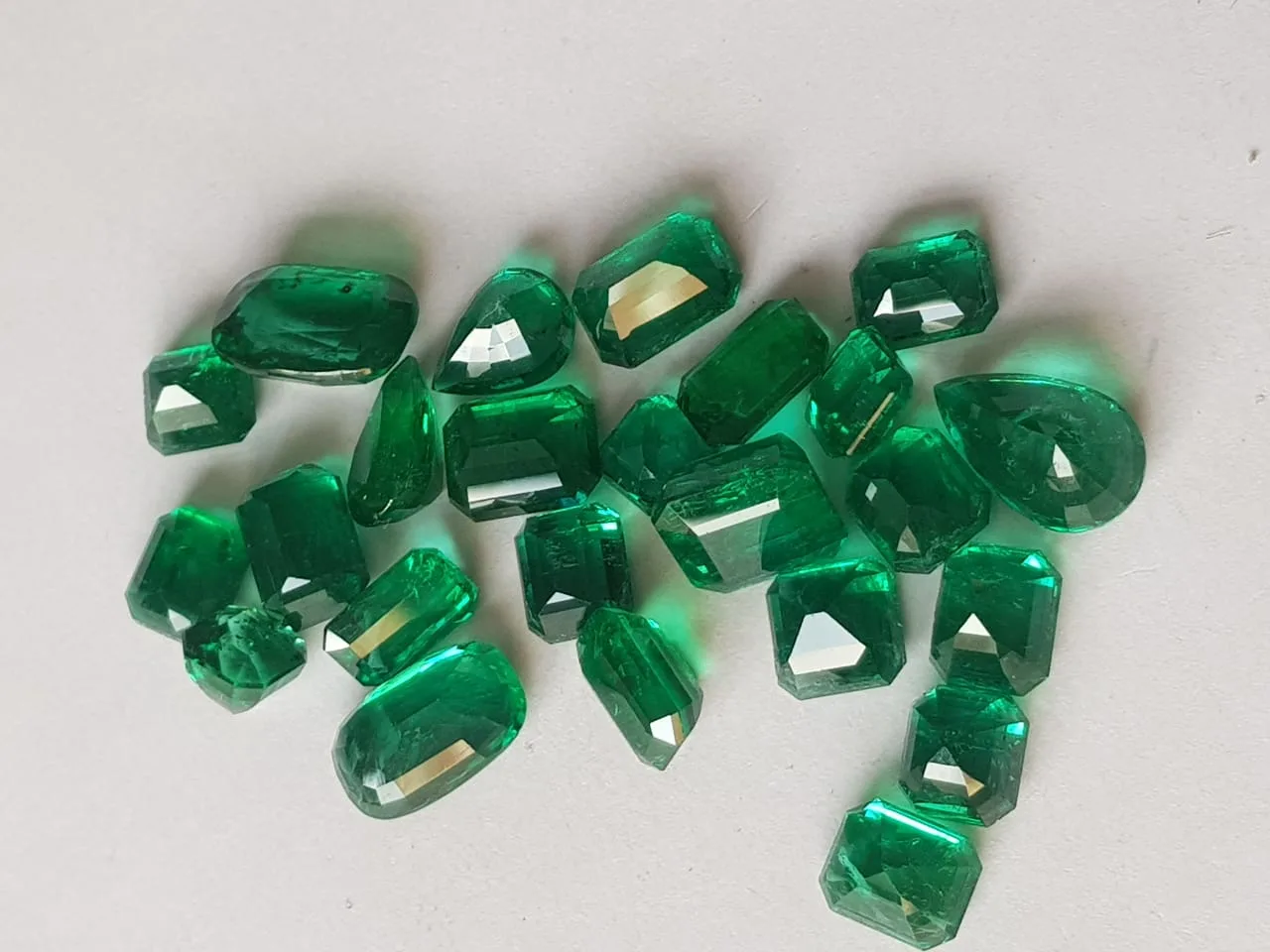
1. Look for the “Jardin” (The Inclusions Test)
The most reliable sign of a natural emerald is its imperfections.
Almost all natural emeralds contain tiny internal flaws, fractures, and minerals. Jewelers often call these internal features the “jardin” (French for garden).
What to Look For:
- Under Magnification (10x Loupe): A real emerald will look like a miniature, mossy garden inside.
- Look for wispy, threadlike inclusions and tiny, scattered crystals.
- The Three-Phase Inclusion: Many high-quality emeralds (especially Colombian) show three tiny features together: a solid crystal, a liquid, and a gas bubble. This inclusion is a definite sign of a natural stone.
The Red Flag: If an emerald is perfectly, absolutely flawless to the naked eye, be suspicious. An eye-clean, untreated emerald is extremely rare and costs a fortune.
Fact Check: The Gemological Institute of America (GIA) classifies emeralds as a Type III gemstone, meaning they are expected to have inclusions.
2. Check for the “Fire” and Luster
The term “fire” refers to the rainbow flashes of color you see when light hits a gem.
You might be surprised to learn that emeralds have very little “fire.” They prioritize color over sparkle.
Real Emeralds vs. Fakes:
- Real Emerald: Has a glassy, waxy luster but shows very little rainbow brilliance or “fire.”
- Fake (Glass/Diamond Simulant): If the stone radiates an extremely bright, fiery rainbow of colors, it is likely a fake.
Also, real emeralds have a low Refractive Index (RI) compared to diamonds. This means they look less “sparkly.”
3. Examine the Colour and Facet Edges
Color is the most critical factor in determining an emerald’s value, and it can also hint at its authenticity.
Color and Clarity Clues:
| Feature to Check | Sign of a Real Emerald | Sign of a Fake Stone |
| Hue (Colour) | Pure green to a slight bluish-green. The color is deep, rich, and medium-to-dark. | Often has strong yellow or brown undertones, or an overly bright, unnatural green color. |
| Facet Edges | The edges (facets) are usually sharp and crisp. | The facet edges are often rounded, worn down, or look like an “orange peel.” |
| The Girdle | The girdle (the thin edge where the stone is set) is usually a consistent green color. | If the stone is an assembled fake, the girdle might appear colorless or have a visible glue line. |
4. Perform the At-Home Density and Temperature Test
Two simple physical properties can easily expose glass or plastic imitations.
Density Test (Weight):
Natural emerald is a very dense mineral.
If you compare an emerald to a piece of glass of the exact same size, the emerald will feel noticeably heavier.
Temperature Test (Touch):
Natural stones, like all minerals, are better heat conductors than glass.
- A genuine emerald will feel remarkably cold to the touch at room temperature.
- Fake stones like glass or plastic will warm up very quickly in your hand.
Important: This test only works if the stone has been resting at room temperature.
5. Demand an Official Gemology Certificate
The only way to get a 100% guarantee is through professional verification. Never buy a high-value stone without paperwork.
- Look for certificates from globally recognized laboratories.
- These include the GIA (Gemological Institute of America) or IGI (International Gemological Institute).
- The report will confirm the gem’s species (Beryl), its origin (e.g., Colombia, Zambia), and detail any treatments applied.
Infographic/Image Content Idea
Title: Real Emerald vs. Lab-Grown/Fake: Know the Key Differences
| Feature | Natural Emerald (Panna Stone) | Synthetic/Fake Emerald |
| Internal Structure | Contains “Jardin” (inclusions, fissures, three-phase fluid bubbles). | Often eye-clean or flawless; may contain internal curved growth lines or no inclusions at all. |
| Mohs Hardness | 7.5 to 8.0 | Matches the natural stone’s 7.5 to 8.0. |
| “Fire” (Brilliance) | Low. Shows a soft, shimmery glow. | High. Shows brilliant, fiery rainbow flashes (if it’s a glass or CZ imitation). |
| Heat/Temperature | Feels distinctly cold and heavy in the hand. | Warms quickly; feels light (if glass or plastic). |
| Clarity | Expected to be included. Untreated, eye-clean stones are extremely rare and expensive. | Often marketed as “perfect” or “flawless.” |
Key Gemological Facts
To understand why emeralds behave this way, here are the core scientific facts about the gem:
| Property | Value (Source: GIA, GW Lab) | Significance for Buyers |
| Mineral Species | Beryl (Be₃Al₂Si₆O₁₈) | Shares family with Aquamarine. |
| Coloring Agent | Chromium or Vanadium | These elements create the unique, rich green hue. |
| Mohs Hardness | 7.5 to 8.0 | Hard enough to resist most household scratches, but brittle due to inclusions. |
| Specific Gravity | Approx. 2.65 – 2.80 | This high density makes them feel heavier than glass fakes. |
| Treatments | Over 99% are fracture-filled. | Almost all natural emeralds are treated with oil or resin to improve clarity. |
Frequently Asked Questions (FAQs)
Q1: Is it bad if my emerald is treated with oil?
A: No, it is standard industry practice. Over 99% of emeralds are treated, typically with colorless cedarwood oil, to fill tiny surface fractures. This makes the stone look clearer and more stable. The Gemological Institute of America (GIA) accepts this treatment.
Q2: Why are untreated emeralds so much more expensive?
A: Untreated emeralds with good clarity are incredibly rare. Since nearly every natural emerald contains inclusions, a stone that looks good without any oil or resin treatment commands a massive premium. They are the collector’s ideal.
Q3: What is the difference between an emerald and a green beryl?
A: They are the same mineral species (Beryl). The difference is in the color. Only Beryl with an intense, rich green color (caused by Chromium or Vanadium) is classified as an emerald. Light-colored stones are simply called green beryl and are far less valuable.
About the Author
The author is a certified gemologist and stone expert with over 15 years of experience specializing in precious colored gemstones, particularly the Beryl family. Our mission is to combine ancient Panna Stone wisdom with modern gemological science, providing buyers with the knowledge to purchase authentic, high-quality gems. We believe every buyer deserves complete transparency and confidence in their gemstone purchase